
How to investigate a DarkSecret case
Begin with the case briefing and finish with your own report. This guide explains how to open materials, check accounts and support your answers. It does not reveal any case solutions.
Choose an Investigation
Each case page shows how difficult the case is, how long it usually takes and which languages it is available in. If this is your first case, start with the training case: it is short and uses each tool once. Starting any case needs a free account, so your progress is saved.
Understand the Case File
Every investigation opens with a short introduction: where and when it happened, what you have been asked to find out, and a few facts to start from. Then the folder opens on your desk.
Read the objectives twice. They tell you exactly what your final report will have to answer.
Examine Every Piece of Evidence
Open each document and read it to the end. Reports, logs, receipts, letters, photographs and lab sheets all carry details: a time, a code, a name, a mark on a photo. You can highlight lines, write notes on the papers and lay two documents side by side to compare them.
Some documents hide a lead, such as a web address or an object, and new material arrives as you find what leads to it. In the lab you compare recovered fingerprints with reference prints yourself.
Worth noting as you read:
- Times and dates, to the minute.
- Who had a key, a code or access.
- Something that should be there and is not.
- A detail that appears in two places.
Analyze Witness Statements
A statement presents events from one person's perspective. It can be honest but inaccurate. Compare it with documents and other accounts, remembering that records can contain errors too. During a conversation, ask questions and show the person relevant materials. If their account changes, note what changed and when.
Some cases let you connect Telegram from inside the game and message fictional characters. Replies may be generated using AI. This is part of the game: do not send real personal or confidential information.
Check the Times
Note the times from documents, receipts and call histories in your notebook, with their source. Then compare them with what people say: a mismatch calls for checking, rather than proving that someone lied.
Review the People Involved
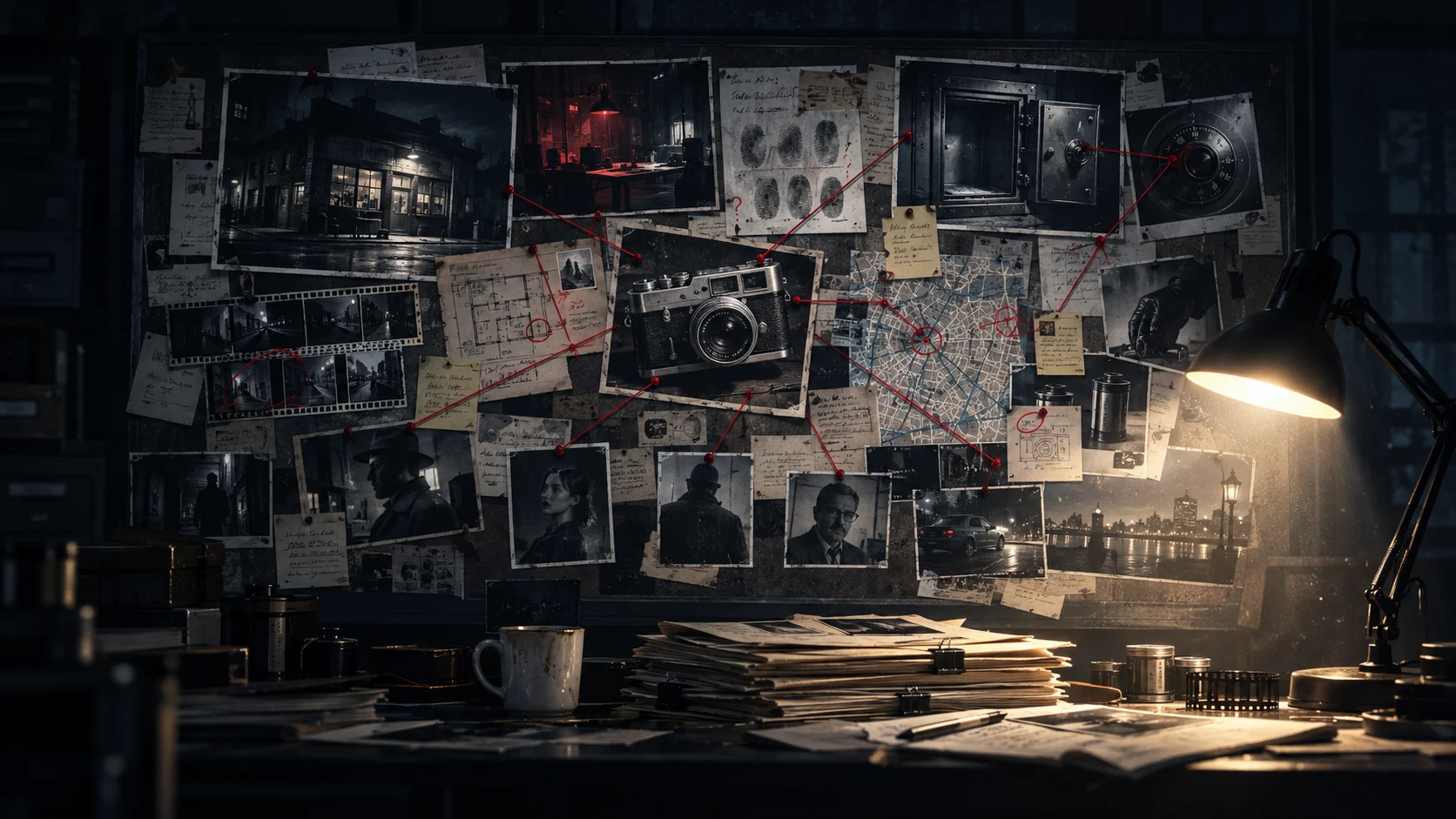
Learn how the people connect to the case and distinguish witnesses, people reporting an incident and suspects. When testing someone's possible involvement, consider their opportunity, possible motive and account of the timing. Put materials that support your theory and those that contradict it on the board.
Complete your final report
When you are ready, submit your report: who did it, when it happened, why, and the evidence that proves it. The report is checked against the case, and the debrief then shows what really happened and what you missed.
If you are stuck, hints come in three levels, from a gentle nudge to a clear pointer. Use as few or as many as you like.
Common Mistakes to Avoid
- Accusing the first person who seems nervous. Nerves are not evidence.
- Skipping documents that look dull. Logs and receipts are where the times are.
- Trusting a statement because it is detailed. Check it against the records.
- Deciding before new material arrives. Read what the case brings in later.
- Submitting with a gap. If one part of your answer has no evidence behind it, go back to the file.
Start with the training case
The training case is a short story that introduces the tools as you play. Find its estimated playing time and description in the case list.
- File No. 000
Night Code
The alarm was switched off with the night technician's code. He swears he was at the cinema.
- Theft · Training case
- Easy
- 25–45 min
- 1–4 players
- HY · EN · RU
Free during the BetaView case details